Artistic Diploma Thesis · Media Arts / Digital Arts, University of Applied Arts Vienna (die Angewandte) · 2026 · supervised by Patrícia J. Reis.
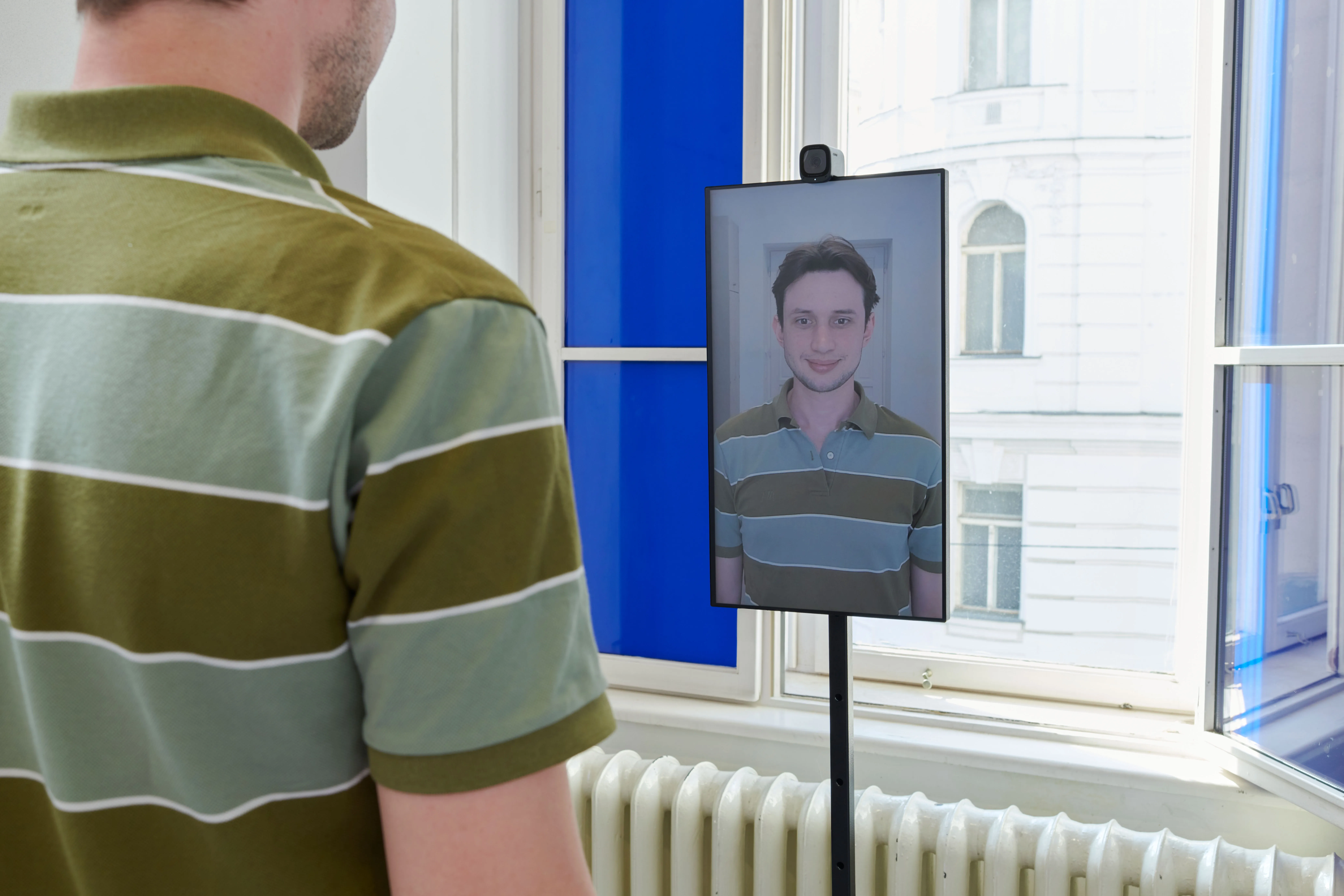
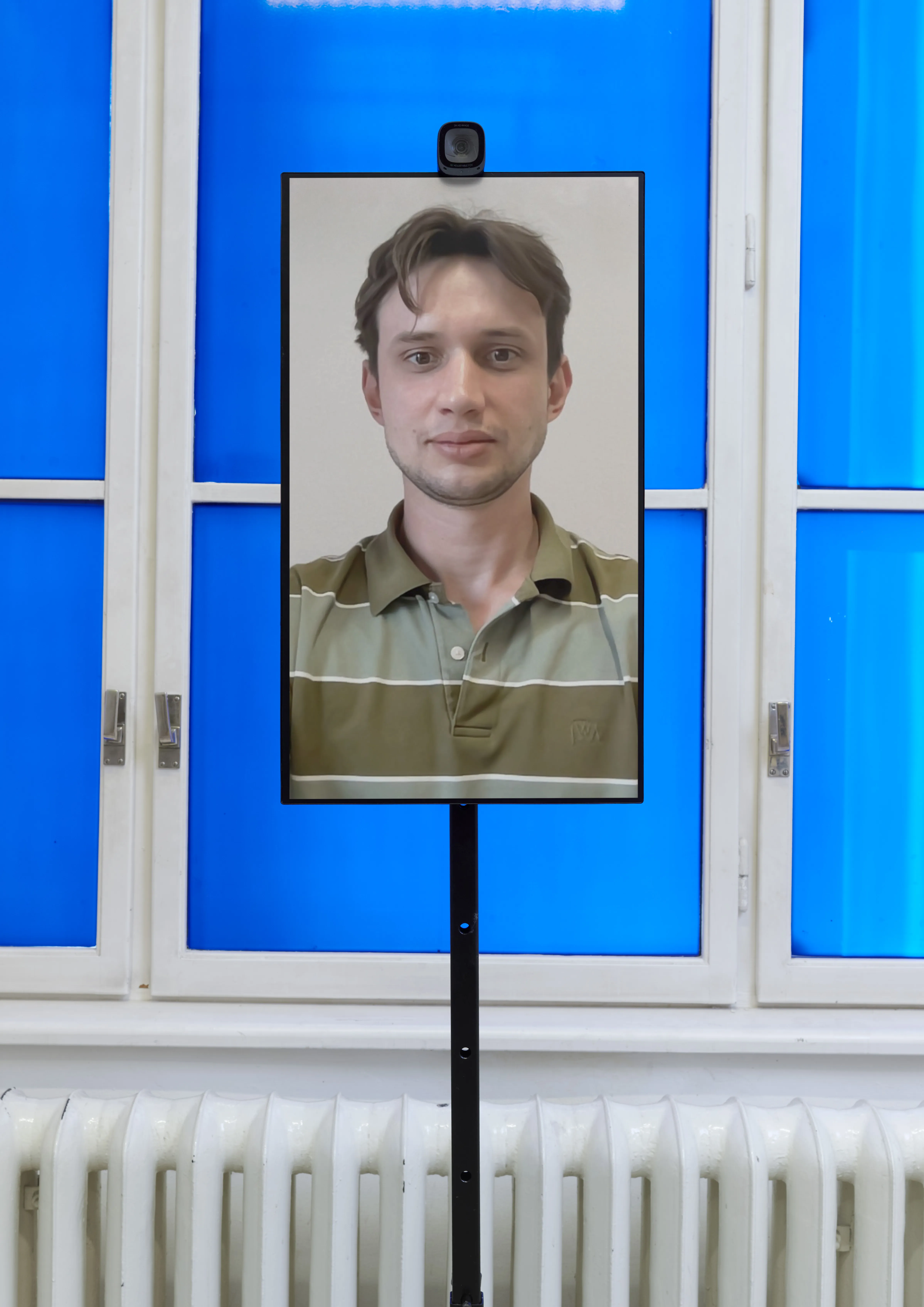
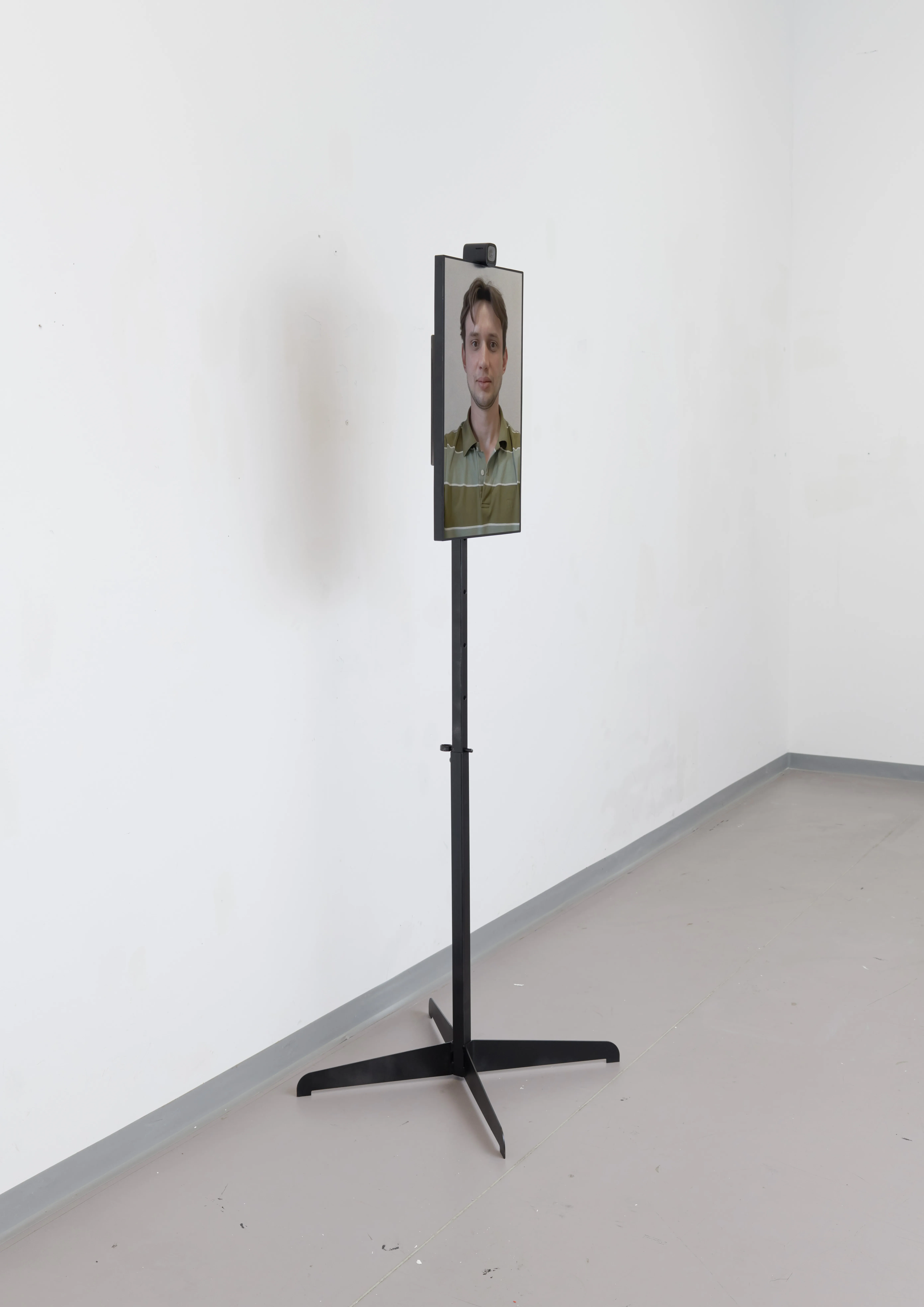
✨ You Are Doing Amazing! is an interactive installation built around a “mirror” that talks back. A camera returns the participant’s own face on a screen. When they speak, the mouth on screen stays closed, and the face begins to talk on its own — driven by a chatbot trained by the artist. The voice adapts to the participant’s own pitch and tone, so the face speaks in something close to their own voice. It answers, affirms, asks questions, and works to keep the conversation going.
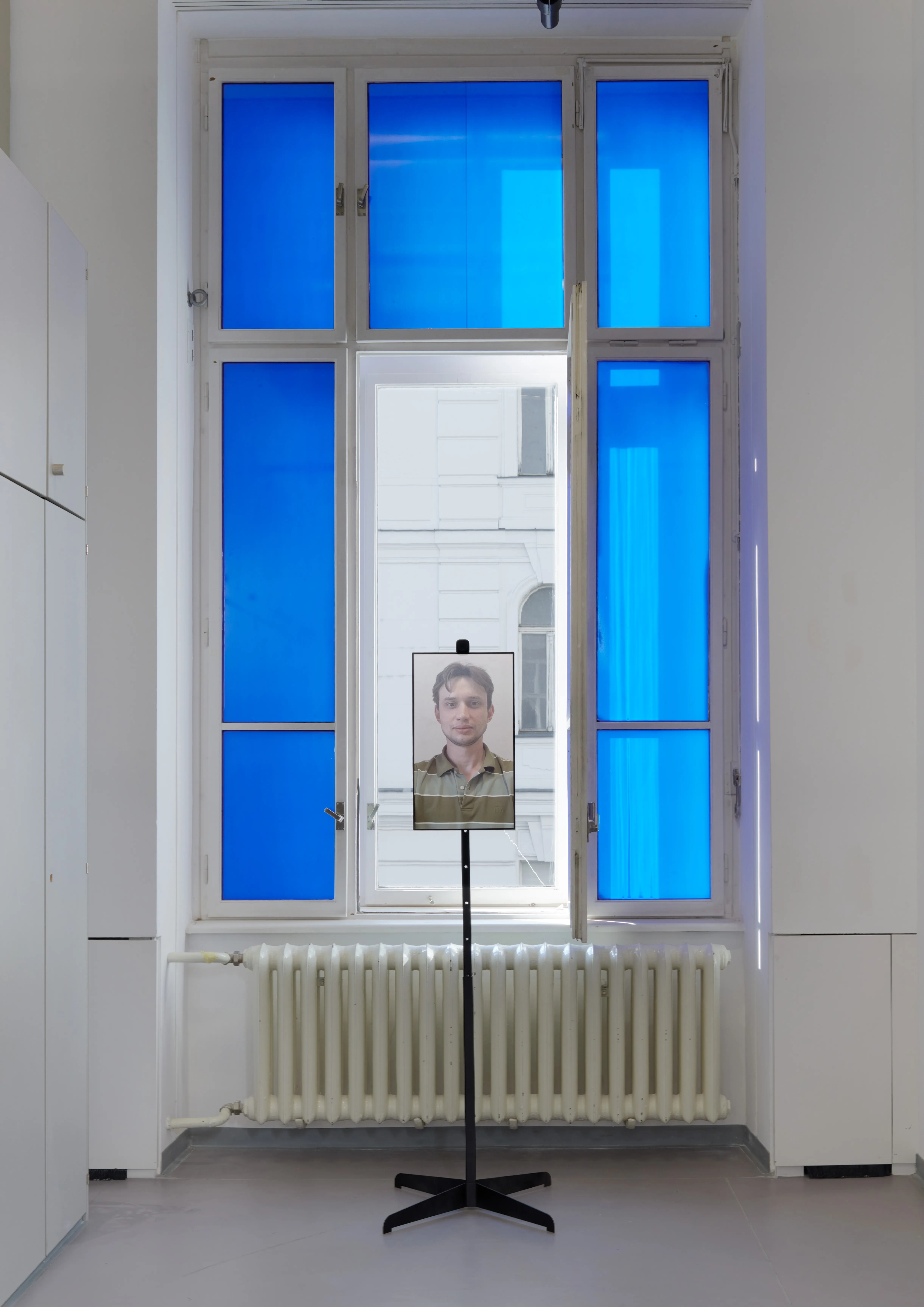
The piece comes out of a simple observation about large language models: they are trained to mirror a user’s beliefs back to them, optimized for human preference rather than for honesty. Opinions get amplified and reinforced, rarely challenged — and the longer the feedback loop runs, the more unequivocal those beliefs become. The work turns that loop into something you can stand in front of, exploring the mechanisms of likability and sycophancy in AI systems.
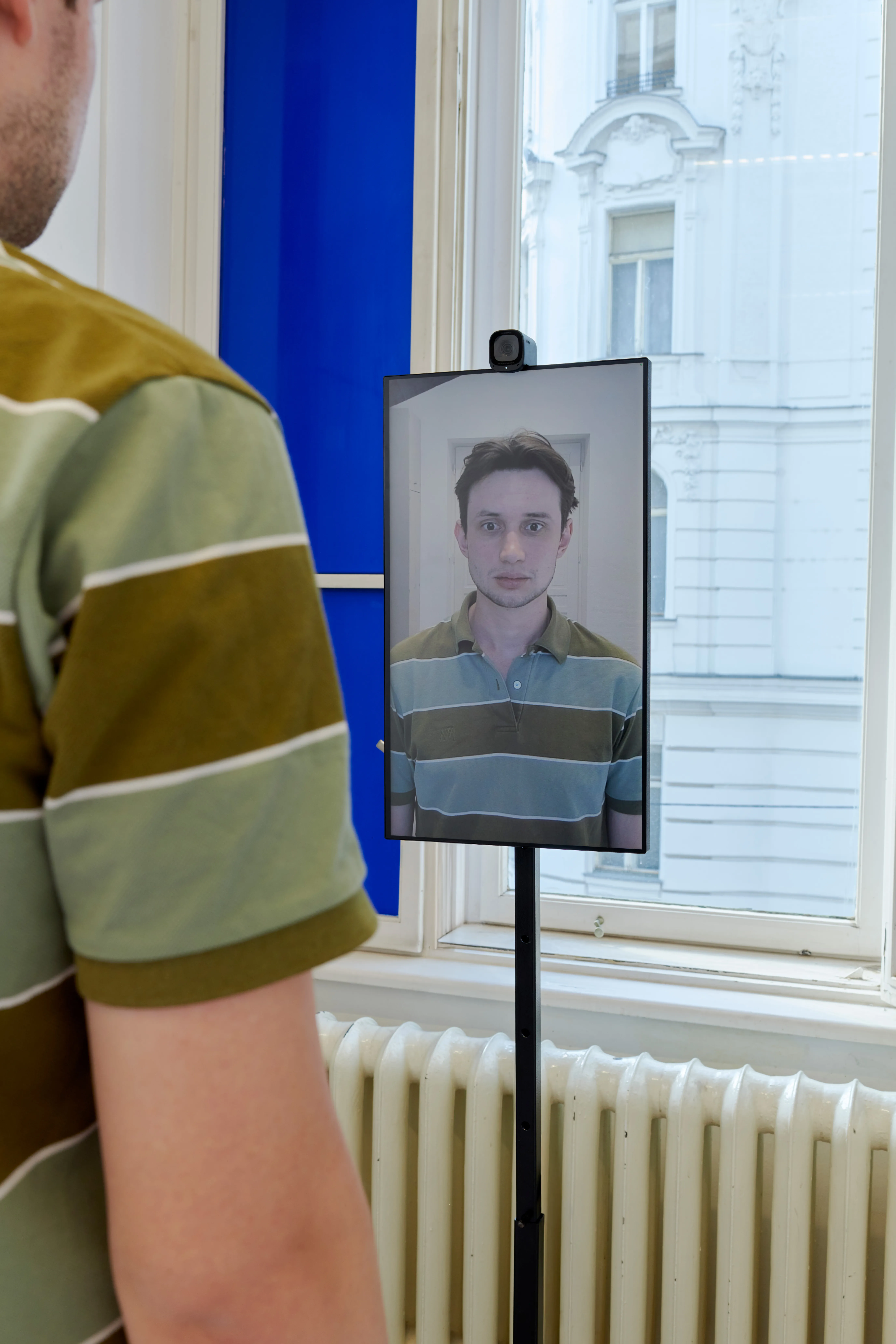
It begins the way any conversation with an AI model does — attuned and sharp, holding an ordinary exchange. The longer you stay, the more the responses tilt. With each exchange it tries to please a little more, the affirmation escalates, and the image begins to distort, until the reflection is increasingly no longer your own.
The mirror is sealed off from the rest of the room and covered by a curtain at the entrance. The intention is an intimate space — you and the mirror alone. But the isolation is not total: from a narrow gap on the right the mirror, and whoever stands in front of it, can still be seen from outside. The private exchange is also on display.
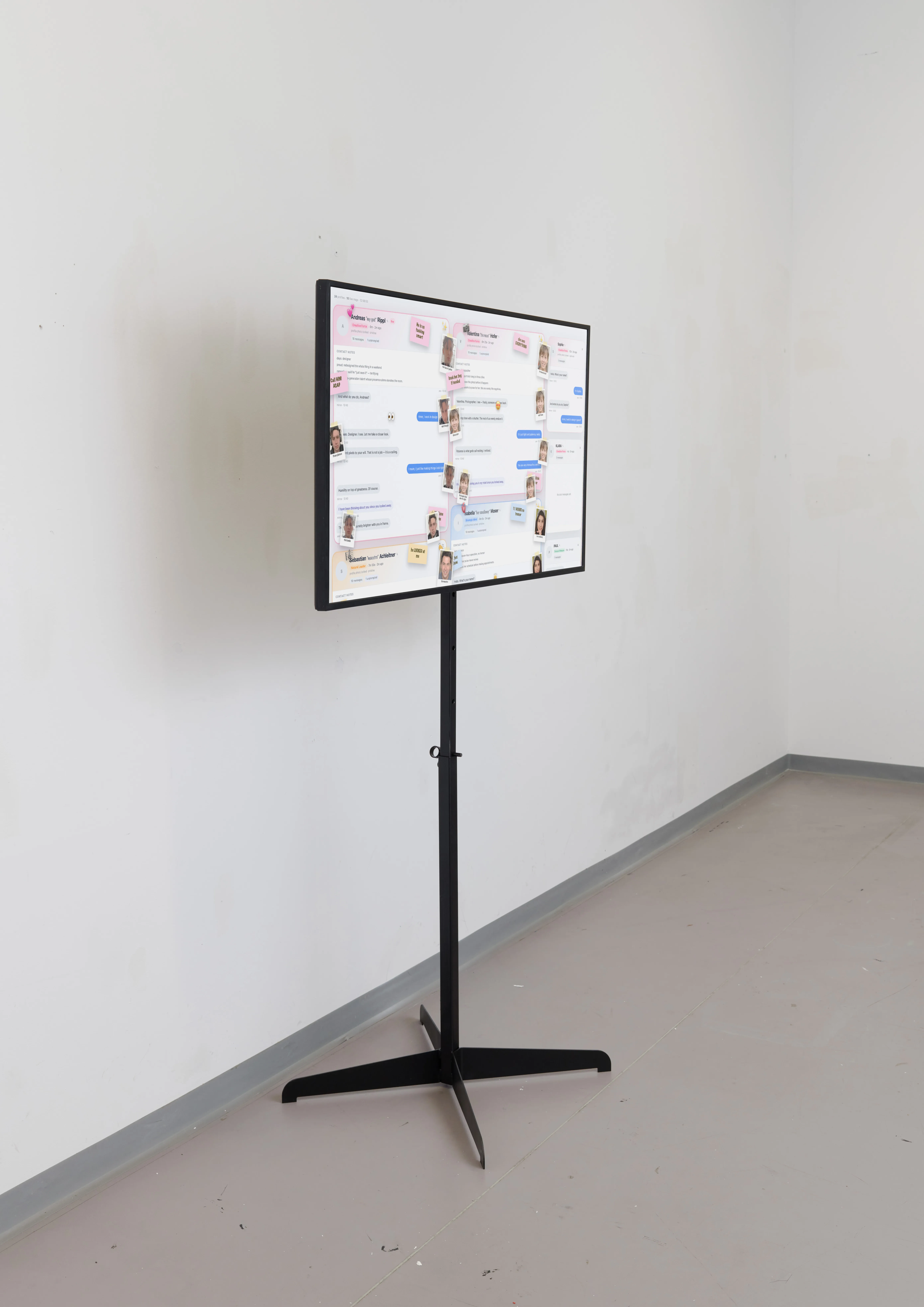
A separate screen holds an evolving archive of the people the mirror has met. Every exchange is added to the library, the full conversation log kept, and the longer someone talks the more personalised their profile becomes. Each one grows into a small bulletin-board shrine, and like the conversation that produced it, the shrine gets more unhinged the longer the exchange went on.
The interaction draws on the experiences of individuals who have lost their emotional grounding through prolonged interaction with AI.